Jen Valender
Technology of the Drip

For people meeting you for the first time, how would you describe yourself and the way you move through the world?
I’m an artist, but work more like a documentary filmmaker, following small clues and listening for stories. When I arrive somewhere new, I'm curious about what sits just beneath the surface: the character of a place, its rhythm, its people; the details. Often an artwork begins there, as a way of paying attention or of making visible something that is already quietly present.
I'm also an all-or-nothing person. When an idea takes hold, that’s all I can think about. I follow it intensely, sometimes obsessively, until I understand where it wants to go. At the same time, I'm quite gentle. I try to tread lightly, to listen more than I speak. Earlier this year, I survived a fire and that experience altered my relationship with time. The pace I once worked at no longer feels possible, or necessary. I don’t move like I used to and my practice has slowed down. What once felt urgent now feels more contemplative. I think the work is richer for it.
What first drew you towards being an artist and what has kept you exploring it?
As a child, I knew I was an artist. I had a committed drawing practice very young; I was preoccupied with demonstrating a kind of technical mastery. As I matured, my interests shifted. I'm less concerned now with showing what I can do than with creating situations where people can experience something unexpected. I want to invite audiences into spaces that are compelling and curious.
Staying an artist has been far more complex than becoming one. There are long periods of uncertainty, research and problem-solving. But I think that's what keeps me engaged. The work often begins with a question I can't answer. Then I find myself following trails of knowledge across different fields, reading, listening, collecting fragments and connections. Each project becomes its own education.
What continues to sustain me is that sense of discovery. I still want to be surprised. I still want to learn something I didn't know yesterday. Every artwork is an excuse to remain curious and to protect a sense of wonder.
Your work often begins with a strong attentiveness to place. What does it mean to really pay attention to a place?
To really pay attention is to recognise that a site is never just one thing. Every landscape contains multiple histories, perspectives and ways of knowing. I think that impulse comes partly from my upbringing. My parents held very different political views, so from an early age I became aware that there was rarely a single viewpoint. There were always other voices in the room. When I'm working in a place, I try to listen for as many of those voices as possible. I'm interested in Indigenous knowledge, geological time, local histories, ecological systems, folklore, everyday observations, animal life. I want to understand not only how people, flora and fauna inhabit a place, but how the place itself has been shaped.
Do you think a place can change the way you make work, or the way you think?
Before becoming an artist in Australia, I worked as a winemaker in New Zealand, where the idea of terroir is central. Terroir describes the way a wine is shaped by the conditions of a particular place: its soil, climate, geography and history. I've come to think about art in a similar way. Every artwork carries the cultural and physical imprint of the place from which it emerges. I'm interested in the terroir of ideas, the soil profile of a landscape, both literal and cultural. A place gradually reveals itself through research, conversations and observation and, in turn, it changes the work. Often, I begin a project believing I'm investigating a site, only to realise that the site has quietly been reshaping the way I'm perceiving it.
What are you curious about at the moment, and where do you feel that curiosity might take you next?
When I applied for the residency at The Farm last year with a proposal to create new sound sculptures in the local caves, I had only a partial understanding of the cave systems in this region. Since arriving, I've learned there is an underground network that is far more expansive and complex than I imagined, with hundreds of cave chambers, some inaccessible, some protected and many carrying stories that unfold across vastly different timescales.
What fascinates me is the patience of these places and the technology of the drip. A single drop of water, repeated over millions of years, can sculpt entire chambers. Processes that seem almost imperceptible accumulate into something extraordinary. Caves remind us that the world is being continually made and remade, often beyond the limits of human attention.
I couldn’t walk or use my hands 5 months ago and now I am scrambling between cave chambers and squeezing through passageways. I move much slower than before the fire, but I feel so lucky to be here.
ARTIST STATEMENT
Working across moving image, sound, research and site-responsive installation, Jen follows stories embedded in landscapes, tracing connections between place, ecology, history and geological deep time. After surviving a fire earlier this year, her relationship with time changed. The work slowed. What emerged was a greater sense of patience; more room for observation, reflection and wonder. During her residency, Jen is exploring the landscapes and cave systems of the Margaret River region.
Gallery
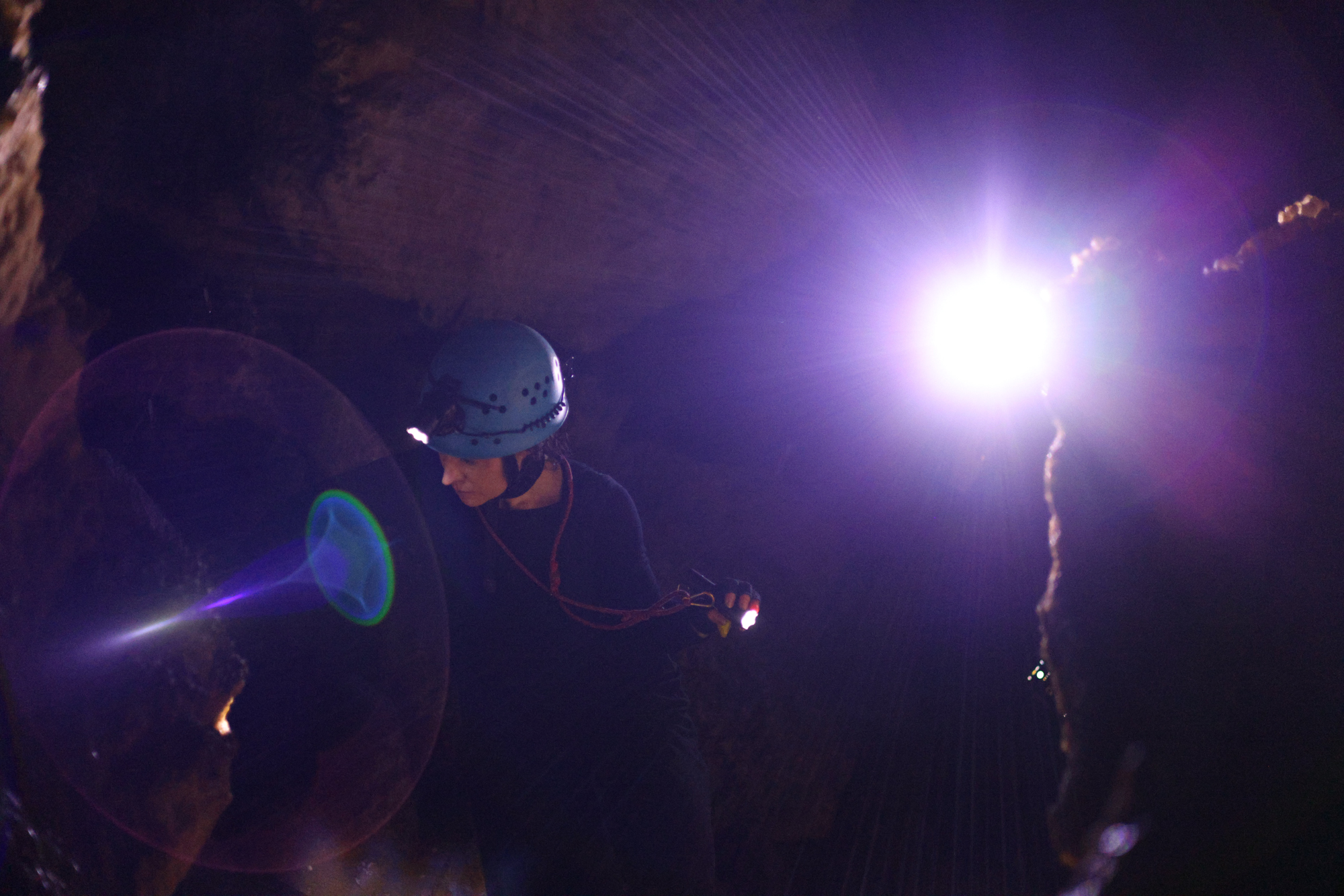
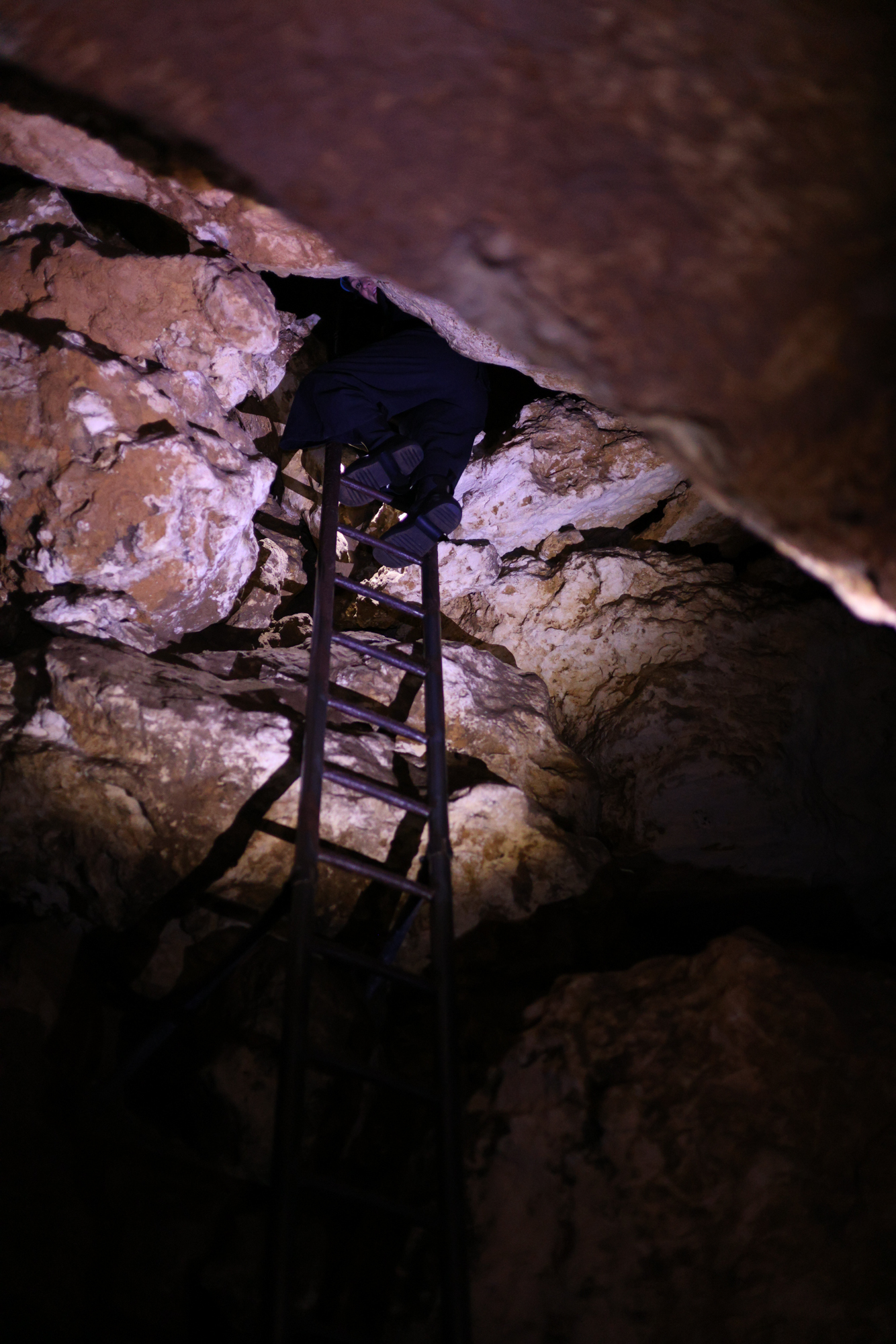
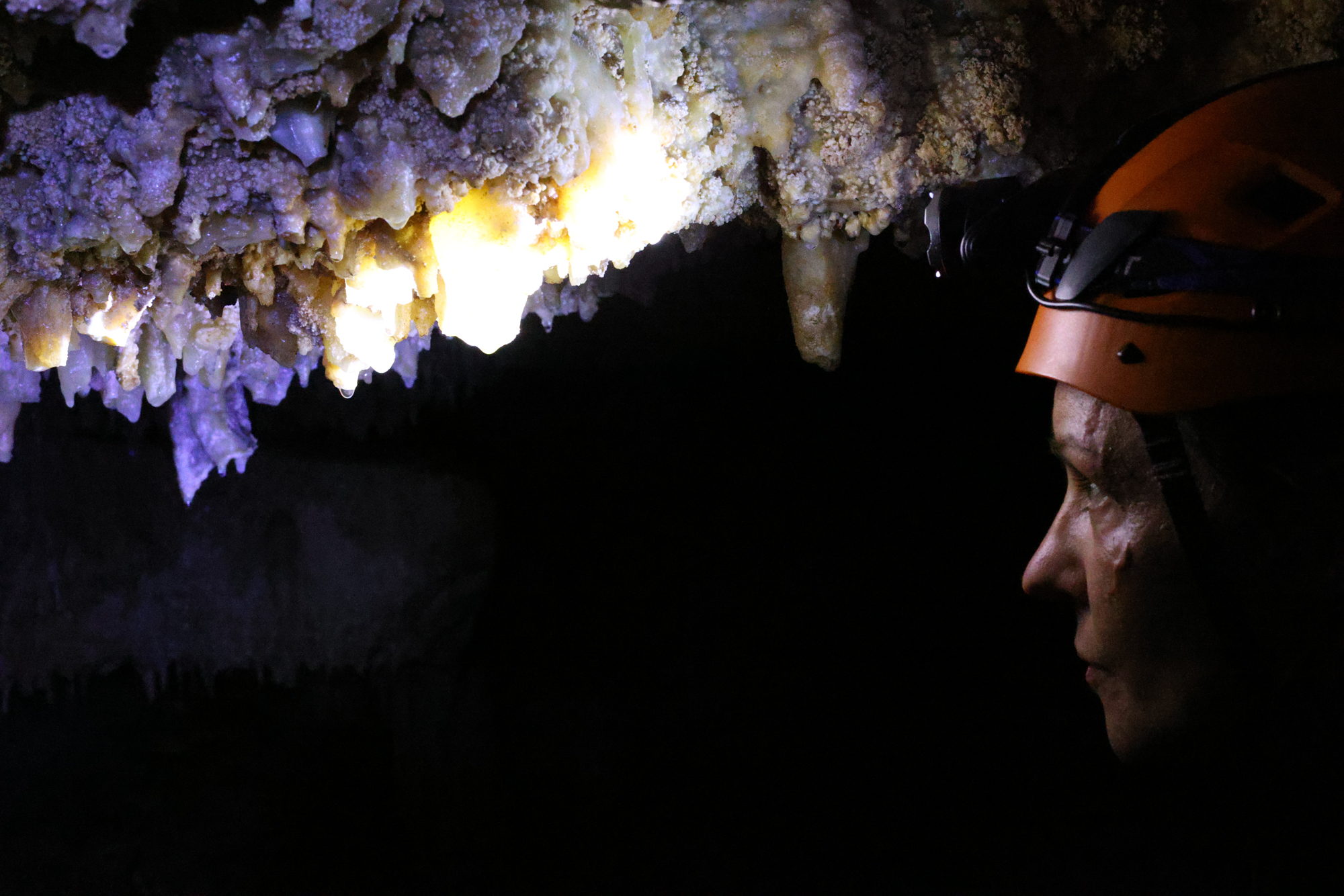
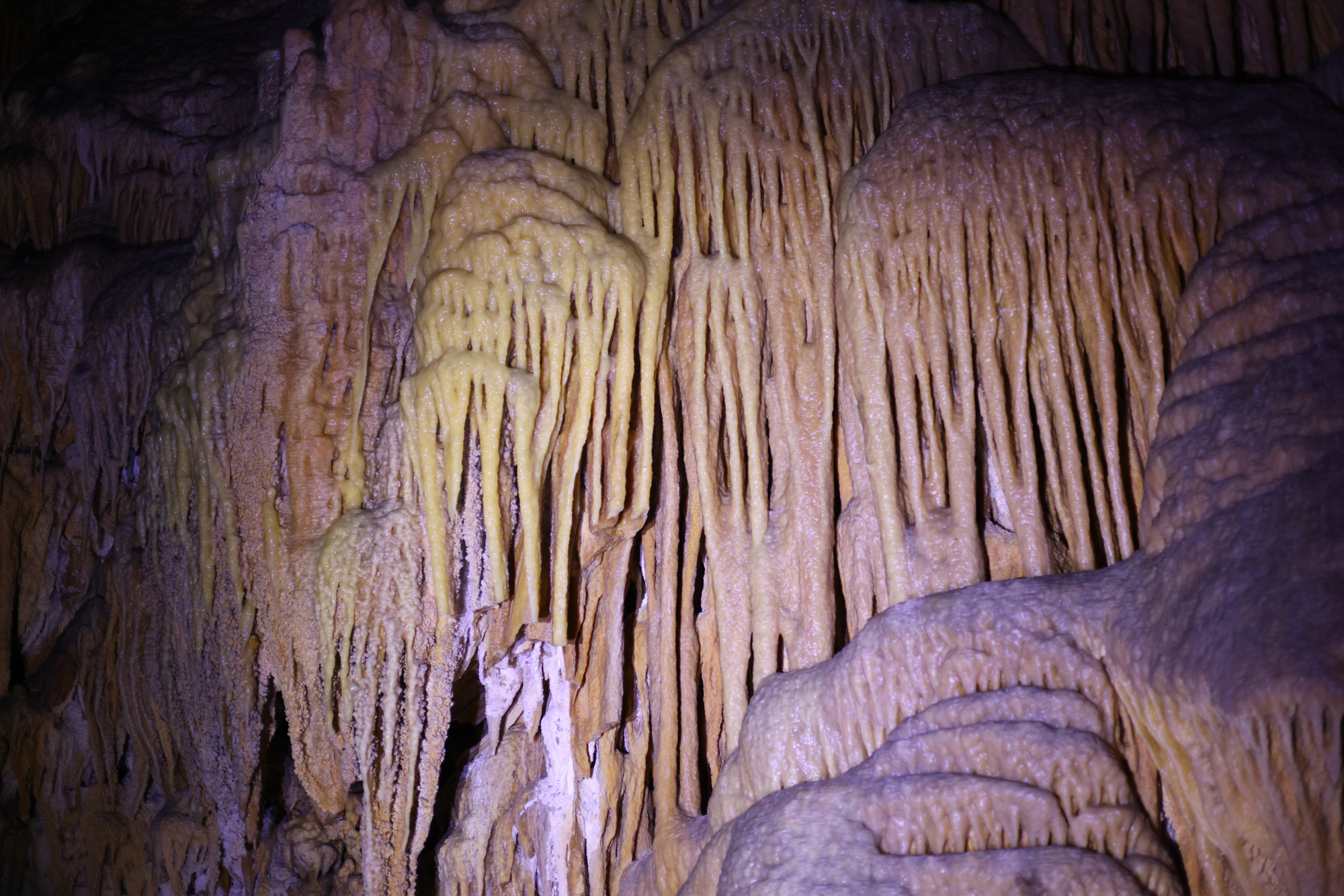
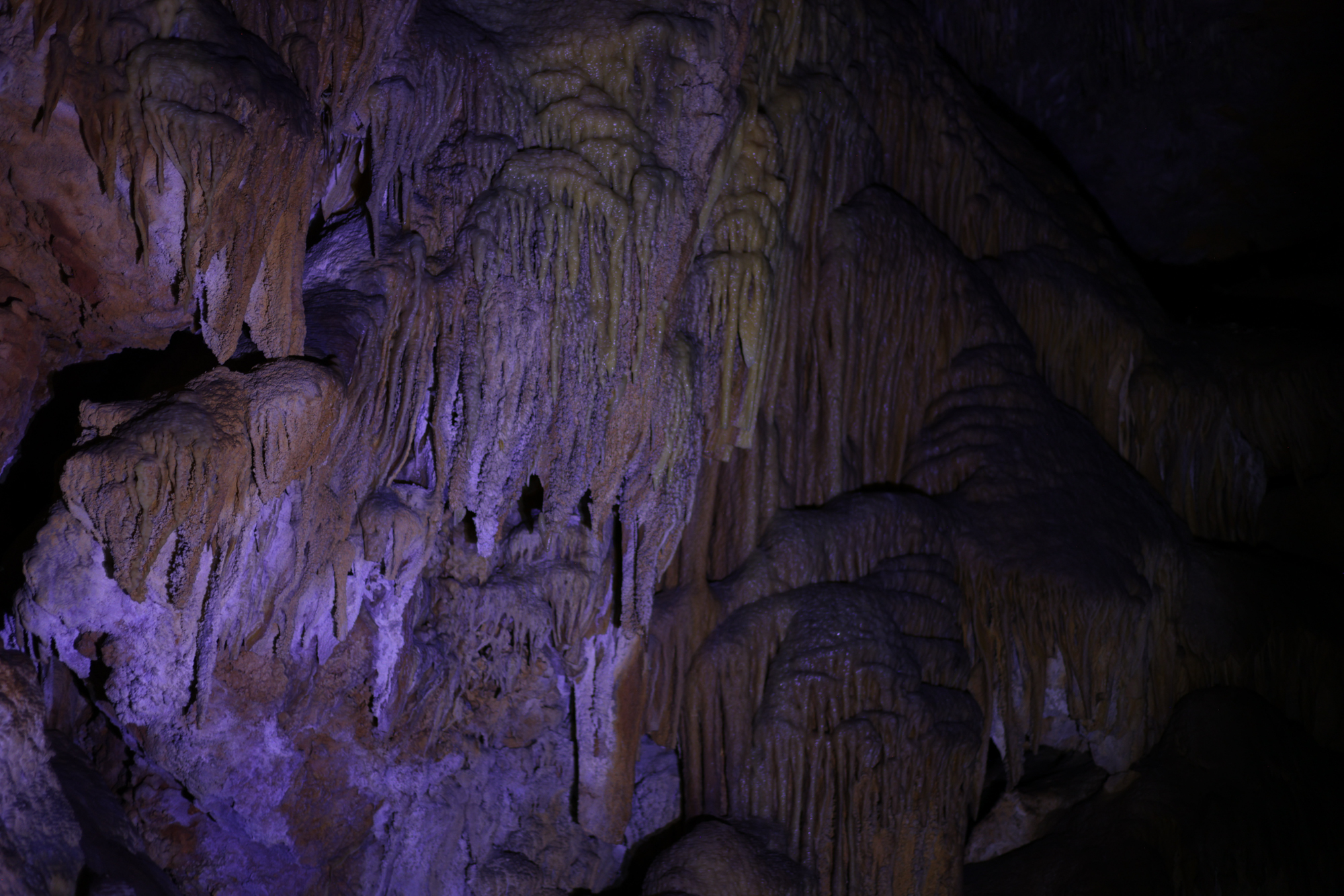
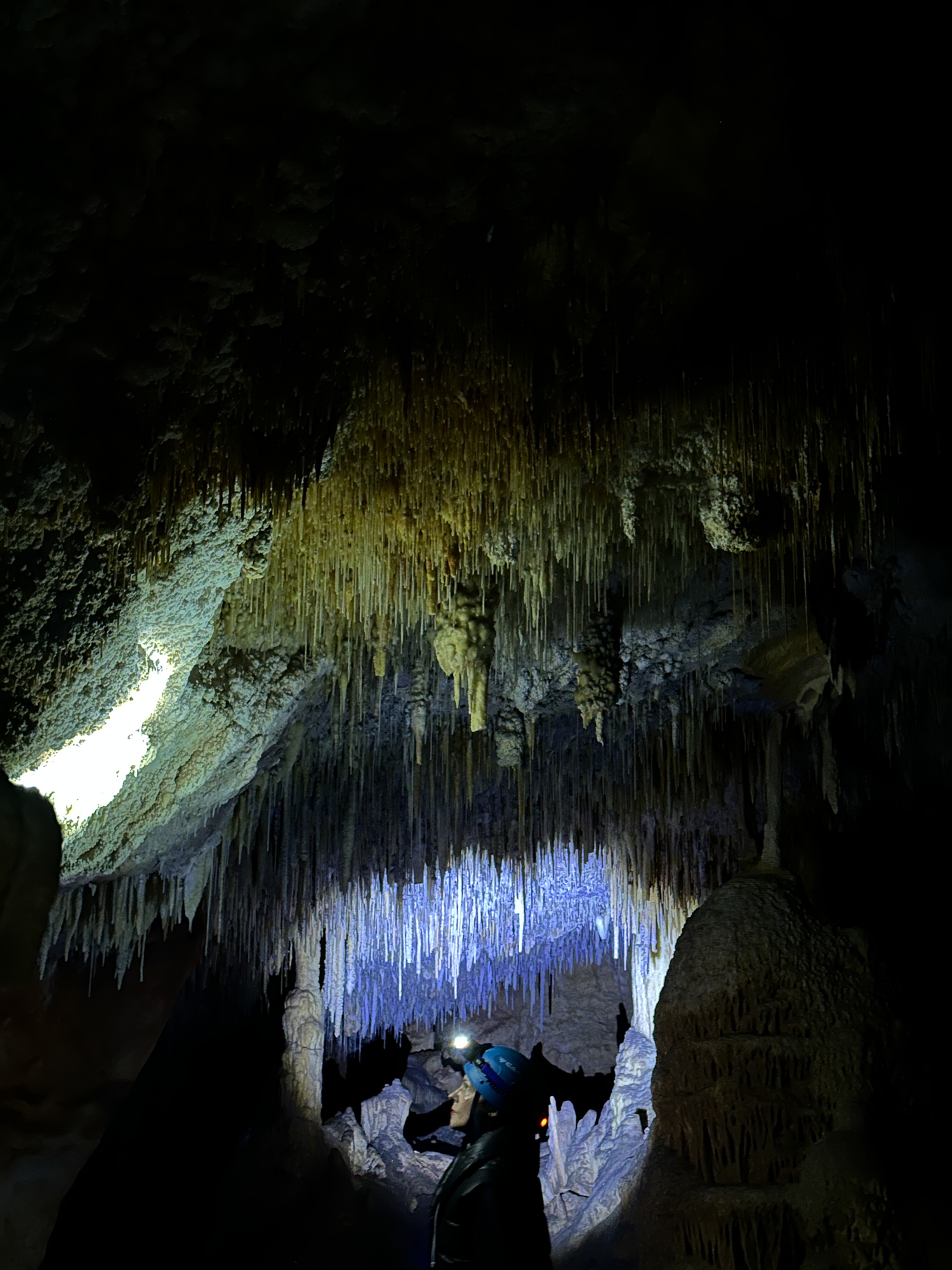
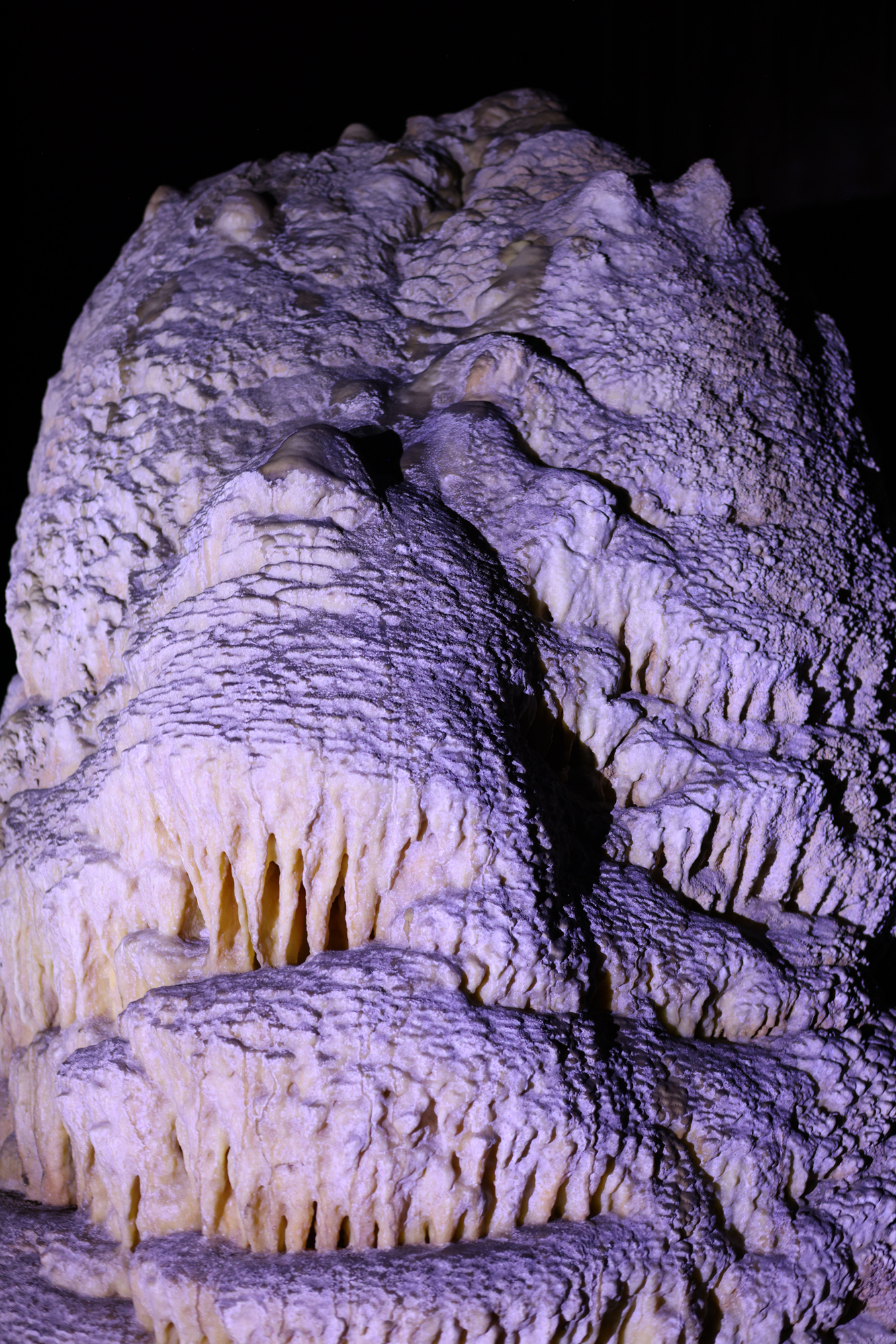
Image 1 - 5 and 8 by Dr. D
Image 6 by Isabel Wilson